Health, hygiene and dignity in the Koma hills
Five hundred women and children in Koma, Jada LGA, were reached with cancer and infectious disease sensitization delivered alongside medicines, WASH kits and menstrual supplies.
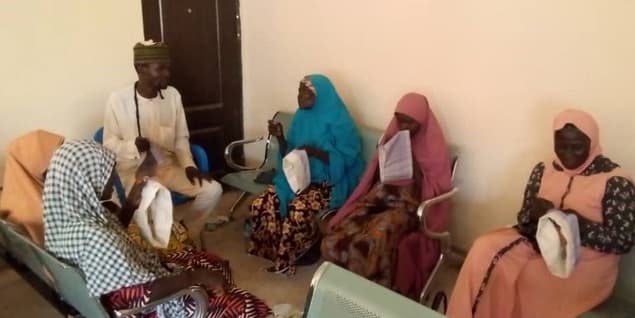
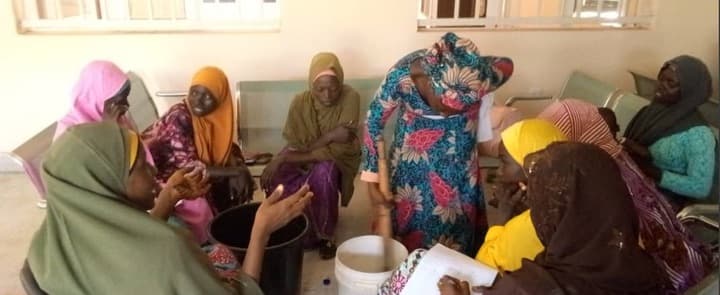
Koma lies in the hills of Jada Local Government Area, in the south of Adamawa State. The organization's own record of this outreach describes it as a remote hill community, and that description carries a practical consequence: a visit has to do a great deal of work while it is there, because there will not be another one next week.
The sensitization was built around three subjects. The first was breast cancer — its signs, its risk factors, and where a woman who recognises them should go. The second was cervical cancer, covered on the same terms. The third was the prevention and transmission of infectious diseases. Referral pathways were part of the content rather than an afterthought, on the reasoning that knowing what to look for is only useful alongside knowing where to take it.
Health education on its own, though, asks a woman to give up a working morning in exchange for information. This outreach did not ask that. Drugs were distributed to participating women and children. WASH kits and hygiene kits went to participating households. Menstrual pads and tissue paper were distributed as dignity supplies — the category of item that is quietly rationed first when a household budget tightens.
Three hundred women and two hundred children were reached: five hundred people across the sensitization sessions and the distribution.
The water, sanitation and hygiene component was delivered in partnership with RUWASA, which meant the kits arrived with the health messaging rather than on a separate visit weeks later. For a community at the end of a long road, the difference between one visit and two is not administrative. It is the difference between a household receiving both halves of the intervention and receiving neither.
The organization's reading of the outreach afterwards was straightforward: pairing health education with tangible supplies materially increases turnout and retention in remote hill communities. That conclusion shaped how later programmes were designed. The work is recorded against Sustainable Development Goals 3, 5 and 6 — good health and well-being, gender equality, and clean water and sanitation.