Treating and preventing malnutrition across Damboa and Geidam
The organization's first United Nations-funded programme delivered CMAM and IYCF as a single package to 500 pregnant and lactating women and 1,000 children under two, across Borno and Yobe States.
Damboa is in Borno State. Geidam is in Yobe. Both sit in Nigeria's conflict-affected North East, and both were covered by a single nutrition programme funded by the World Food Programme — the first United Nations-funded work in the organization's documented record.
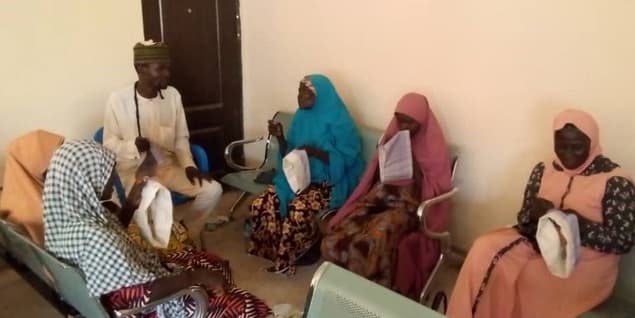
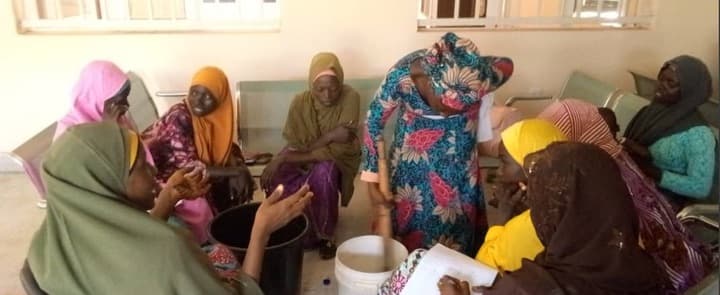
The target group was the one that acute malnutrition reaches first and hardest: pregnant and lactating women, and children under two years old. The programme addressed them through two established protocols delivered together. Community-Based Management of Acute Malnutrition, or CMAM, is the treatment side — screening children at community level and providing therapeutic feeding to those identified as acutely malnourished. Infant and Young Child Feeding, or IYCF, is the prevention side: counselling mothers on breastfeeding and on appropriate complementary feeding as a child moves onto solid food.
Running the two as one package rather than in sequence was deliberate. A mother who comes in because her child needs treatment is already present for the counselling that reduces the chance of a second episode; a mother invited back separately, weeks later, frequently is not. Delivered together, the treatment component keeps women engaged through the prevention component.
Screening at community level mattered for a different reason. In areas where movement is restricted, a facility-based programme reaches the children whose families can travel to a facility, which is not the same population as the children who are malnourished. Taking the screening to the community closes that gap.
Five hundred pregnant and lactating women received nutrition support and IYCF counselling. One thousand children under two were screened and supported through the CMAM pathway — fifteen hundred people in total, across two states.
The programme is recorded against Sustainable Development Goals 1, 2 and 3: no poverty, zero hunger, and good health and well-being. It also established something the organization has drawn on since — a delivery record with a United Nations agency, in the two states where the need is most acute.